How to Elevate Patient Satisfaction: 8 Effective Strategies
May 14, 2026

A patient can walk out of a clinic satisfied with everything and still feel unhappy about the billing experience. In many healthcare practices, the financial side of care creates more frustration than the treatment itself. Patients experience stress because of confusing statements, unexpected balances, delayed insurance processing, and poor communication which extend beyond their appointment time to create ongoing stress.
Currently, patients have awareness about their medical expenses. They want to know more about coverage and the costs they will need to pay. Also, they enquire about their medical bills before the treatment starts.
Patients assess different healthcare providers based on treatment results and the convenience of their complete service experience. It includes scheduling and communication and billing processes.
Healthcare providers need to develop new methods for handling their revenue cycle operations. Billing has evolved into an essential process which impacts all aspects of revenue generation. Patient trust develops through billing processes which impact their ability to stay with the facility and their choice to post reviews and refer others.
Healthcare organizations choose expert billing partners because they seek to enhance their financial processes while boosting people satisfaction levels. Read the full blog for more information.
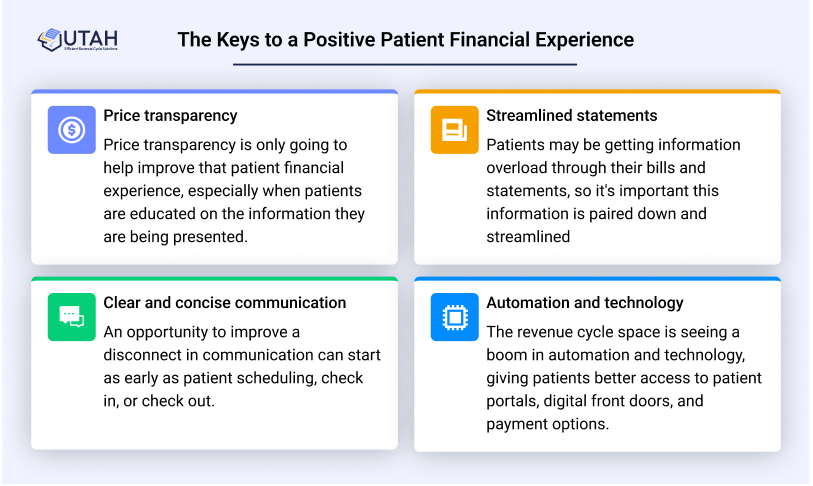
As per CMS survey, the patient experience improves through healthcare transparency and communication. Practices that communicate clearly about costs and insurance responsibilities tend to create fewer disputes and better relationships with patients.
The following billing strategies provide practical solutions that healthcare providers can use to develop improved billing experiences.
Unexpected medical costs stand as the primary reason for patient dissatisfaction. Patients who attend their appointments without prior knowledge of their financial obligation face a situation which results in both confusion and frustration during their visit.
Transparent pricing enables patients to receive treatment when they have complete knowledge of their costs which treatment providers must respect. When providers share their estimated charges with patients, it builds trust. This makes patients feel more confident about receiving medical services.
Doctors can maintain transparency by:
The CMS No Surprises Act overview explains how providers can help patients better understand healthcare costs and avoid unexpected billing situations.
Transparent billing does more than improve satisfaction. It also decreases billing disputes while boosting payment confidence and enables practices to establish stronger relationships with their patients over time.
Patients feel valued and in charge of their healthcare choices. Transparent billing can reduce billing complaints by up to 40–60% according to industry reports.
Insurance verification is one of the earliest steps in the care journey. Any mistakes at this stage can affect the entire experience.
When eligibility checks are incomplete or rushed, patients may later face:
Patients rarely blame insurance companies for these issues. Instead, frustration is usually directed toward the healthcare provider.
To improve the verification process, practices should confirm:
Verification should always happen before the patient arrives for the appointment whenever possible. Many practices now outsource this process because experienced billing teams can use automated eligibility systems. This way providers face less errors and speed up approvals. Services like insurance verification support help practices prevent costly billing surprises while improving the care experience.
For many families, healthcare expenses create financial pressure. A patient who feels overwhelmed by medical bills is less likely to have a positive experience with the practice, even if the care itself was excellent.
Rigid payment systems often increase stress unnecessarily. Patients may avoid answering calls or delay treatment because they worry about costs. Flexible payment options help reduce that pressure.
Practices that improve patient satisfaction usually offer:
Convenience matters more than many providers realize. Patients are more likely to pay balances when the process feels easy, smooth and manageable.
Front staff often create the first and lasting impression of a healthcare practice. Unfortunately, many billing related frustrations are caused when financial information is communicated poorly. Terminology in this field can sound confusing or intimidating to patients. Terms such as:
may not be familiar to everyone.
Patients do not expect staff members to sound overly technical. They simply want clear and polite explanations.
For example:
“Your claim is pending adjudication due to payer processing delays.”
A more effective way is:
“Your coverage company is still reviewing the claim, and we’ll update you as soon as we hear back.”
These small interactions make your clients feel valued.
One of the easiest ways to reduce patient anxiety is to keep patients in loop throughout the billing process. They become frustrated when they receive large balances without warning or notification after their appointment.
Proactive communication can include:
Medical practices use text messaging, email communication and patient portals to establish quick and efficient communication channels. Patients who understand their financial responsibilities beforehand, experience becoming upset about costs.
Many patient statements are overly complex and difficult to read. Dense formatting, technical codes, and unclear adjustments often confuse patients and trigger unnecessary billing calls.
A patient-friendly medical bill should clearly display:
Practices should avoid burdening patients with excessive codes or technical terminology whenever possible. Clear billing statements improve transparency, reduce confusion, and increase the likelihood of faster payments.
Patients increasingly expect digital ease in healthcare. Long wait times, paper forms, and manual payment processes can make a practice feel outdated and inefficient.
New tools help create a smoother and more convenient patient experience while reducing administrative workload for staff.
Helpful tools include:
Modern technology enhances communication, speeds up workflows, and helps patients stay aware about their healthcare journey. Practices that update their RCM operations with time, satisfy both patient satisfaction and operational efficiencies.
Patients expect quick answers when they have concerns about their medical bills. Delayed responses can quickly damage trust.
Common frustrations include:
Fast and effective communication reassures patients that their concerns matter. Healthcare practices should maintain clear response time standards for inquiries. They also train staff members to resolve questions efficiently.
Outsourcing can also improve response times because dedicated revenue specialists are available to manage patient concerns consistently.
Many healthcare practices struggle to manage billing internally because of staffing shortages, changing payer rules, and administrative overload.
When billing departments become overwhelmed, patient experience suffers quickly. Outsourcing medical billing can help providers in every way. Most importantly, it allows providers and office staff to focus more on patient care instead of administrative stress.
At Utah Billing Service, we help healthcare providers create smoother billing operations that support both financial performance and patient satisfaction. From insurance verification and credentialing to coding and denial management, our goal is to simplify the revenue cycle while improving the patient’s financial experience.
The way patients experience satisfaction now depends on more factors than just their clinical treatment. The process of billing now affects how patients trust medical facilities which in turn impacts their online image and their ability to retain patients keeping their business expands. When healthcare providers establish open communication channels and display their operational procedures and financial information to patients they build stronger connections with their patients.
Billing processes can improve patient satisfaction without needing extensive operational changes. The most significant operational improvements will result from solving common daily business challenges.
Patients will select the medical providers who make them feel safe and at ease. From the design of your facility to worry-free payment options, these eight improvements will significantly increase your overall patient experience. Of course, your best results will come from continuously seeking patient feedback and making improvements whenever the opportunity arises.
Book our free demo to handle payment processing and patient financing and payment collections. Our unified solution enables healthcare organizations to deliver better patient experiences through simple billing systems.
The 5 C’s of Patient Care, often used in nursing based on Simone Roach’s theory, are Compassion, Competence, Confidence, Conscience, and Commitment
Empathy and proactive care are key. Doctors play a crucial role in patient satisfaction by providing compassionate care, actively listening to concerns, and ensuring clear communication. All of these can enhance satisfaction scores.
Focus on communication, efficiency, and patient engagement. Hospitals can improve satisfaction by reducing wait times, ensuring clear communication, and offering personalized care.