Epigastric Pain ICD-10 Code: Diagnosis and Billing Guide
October 16, 2026
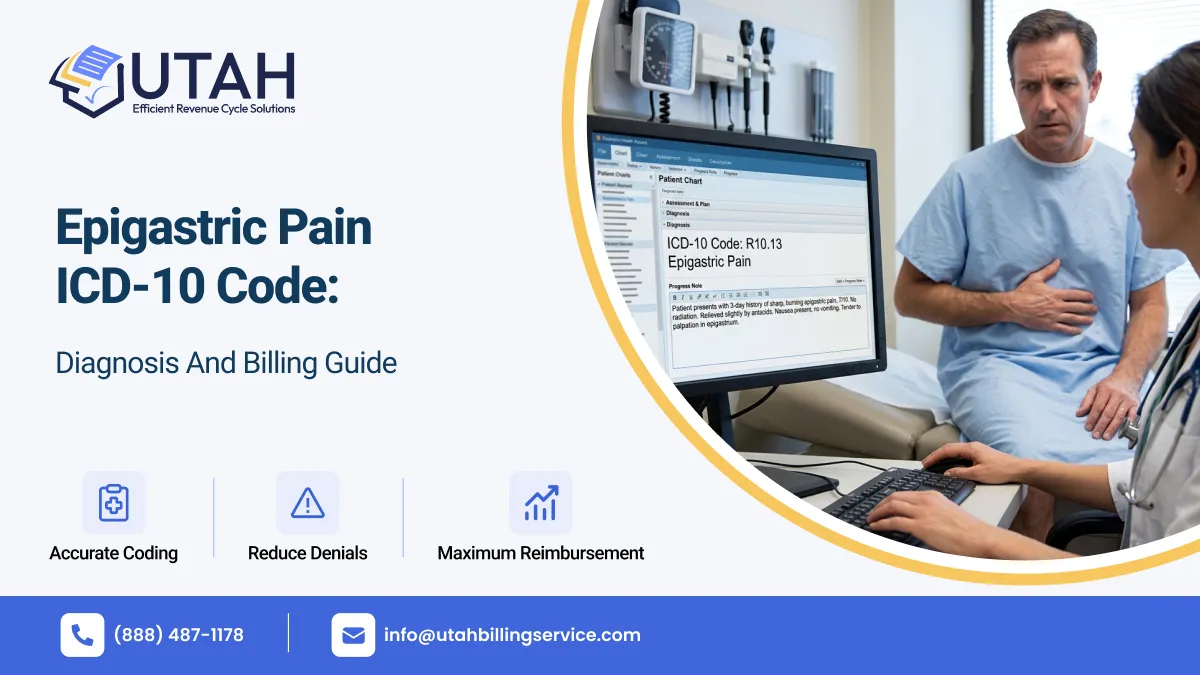
A patient comes to your practice saying they have a burning feeling or discomfort in the part of their belly. You look at the patient check their symptoms and do some tests but you still can’t figure out exactly what is causing the problem. What diagnosis code should be on the bill?
The ICD-10 code for epigastric pain is R10.13. This code is used to show that someone has pain in the middle part of their stomach. Doctors can use this code when the patient has documented pain but there is not a clear cause found yet.
Using R10.13 is not just about knowing where the pain is. Doctors need to think about what they found during the exam what the test results say and if another illness could explain the pain better.
This guide explains when to use R10.13, how it’s different from other codes, for stomach pain and what kinds of documentation problems can affect billing.
The ICD-10-CM code for epigastric pain is R10.13. This is a code that can be used for billing. It is a code that shows the pain is in the upper part of the stomach area.
| ICD-10-CM Code | Description | Status |
|---|---|---|
| R10.13 | Epigastric pain | Billable/Specific |
R10.13 is part of the R10 group. The R10 category covers abdominal and pelvic pain. R10.1 is the branch that marks pain in the belly.
R10.13 also covers dyspepsia that is not otherwise specified. R10.13 has an Excludes1 note for functional dyspepsia, code K30. That distinction matters when you choose a diagnosis.
R10.13 stays valid for the 2027 year. It applies to encounters from October 1 2026 to September 30 2027.
Providers should pick R10.13 when the record shows epigastric pain. The R10 category covers abdominal or pelvic pain.
Epigastric pain is a feeling of discomfort in the middle part of the stomach right below the breastbone and, above the belly button. It can feel like a burning sensation. Like there is pressure or a dull pain. This kind of pain can happen along with feelings of nausea or a swollen belly. Because many different problems related to digestion and not related to digestion can cause this pain just knowing where the pain is located is not enough to find out what is causing it.
Physicians may consider several conditions during an evaluation, including:
Cardiac conditions can also present with epigastric discomfort, making clinical evaluation particularly important.
These conditions represent possible causes, not automatic coding alternatives. The provider’s documented diagnosis determines which ICD-10-CM code is appropriate.
The decision to report R10.13 depends on whether the provider has identified an underlying condition or is still evaluating the patient’s symptoms.
Suppose a patient says they have pain in the middle part of their stomach. The doctor does an exam. Asks for blood tests but the results don’t give a clear answer.
In this case R10.13 can be the code to show why the patient came to the doctors office.
The patient’s medical record should specify that the pain is in the epigastric area rather than simply stating ‘abdominal pain.
If the doctor finds a condition that is causing the pain the way it is coded can change.
For example, a person who comes in with pain in the belly might end up with a clear diagnosis of stomach inflammation.
When the pain usually happens with the confirmed illness doctors usually list the diagnosis instead of coding the pain on its own.
Sometimes it’s right to use extra codes, for the pain if the pain doesn’t usually happen with the illness or if other rules say it should be coded.
Patients sometimes need scans, blood tests or a scope test before a doctor can find out why they are feeling unwell.
When a doctor sees a patient in an outpatient visit they should not list an illness or rule out a condition as if it is definitely the case.
Instead they should write down the symptoms or what they see clearly as possible for that visit.
R10.13 can still be the choice while the patient is being checked for an unknown reason, behind their upper stomach pain.
Not every complaint involving the abdomen should receive the code R10.13. ICD‑10‑CM provides codes for different abdominal regions making the physicians documentation, for the upper abdomen essential.
| ICD-10-CM Code | Description | When to Consider |
|---|---|---|
| R10.13 | Epigastric pain | Pain in the upper central abdomen |
| R10.10 | Upper abdominal pain, unspecified | Upper abdominal pain without a more precise location |
| R10.11 | Right upper quadrant pain | Pain specifically located in the right upper abdomen |
| R10.12 | Left upper quadrant pain | Pain specifically located in the left upper abdomen |
| R10.84 | Generalized abdominal pain | Pain involving the abdomen generally |
| K30 | Functional dyspepsia | Provider-confirmed functional dyspepsia |
The difference between R10.13 and R10.10 is very important.
If the medical record says epigastric pain R10.13 gives exact information, about where the pain is. On the hand if the doctor writes only “upper abdominal pain” and does not say exactly where it is R10.10 might be better.
The R10.13 code includes an Excludes1 note, for dyspepsia (K30).
Excludes1 note means that the two codes generally should not be reported together for the condition. According to ICD-10-CM guidelines an exception may apply only when the documented conditions are genuinely unrelated.
Providers must distinguish dyspepsia from diagnosed functional dyspepsia before selecting the code.
Accurate coding starts with what the doctor decides. Even though R10.13 doesn’t need a list of signs and symptoms the notes, in the medical record need to back up the diagnosis and the treatments given.
The following details can help create a picture of the patients condition.
Write down if you feel discomfort in the epigastric area or if the epigastric pain moves, to another part of the belly or if it spreads to places.
For example saying “epigastric tenderness with burning discomfort” provides anatomical detail than saying just “stomach pain.”
Write down details such, as when the pain started how long it lasts any other symptoms that come with it what the physical exam shows and any significant past medical history
These details help the doctor evaluate the situation and can explain why extra tests or treatment were needed
When clinical indication exists, include tests ordered or reviewed such, as laboratory studies, abdominal imaging or endoscopic examinations.
Connect tests decisions to patient symptoms and clinical findings.
The assessment, as the central tool must separate documented symptoms from confirmed conditions to avoid confusion.
If the cause remains undetermined the assessment should clearly record epigastric pain and any other reportable findings than assigning an unconfirmed diagnosis.
The record needs to show why the medical services were given.
A correct ICD-10-CM code alone does not prove that the service was needed. Insurance companies might look at the diagnosis with the procedure the notes, the rules for coverage and the situation, during the visit.
When the patients symptoms are clear. Small inconsistencies, between the medical record and the diagnosis codes that are submitted create billing problems.
A doctor writes pain but the claim lists R10.10 for unspecified upper abdominal pain.
Although both codes mention abdominal pain R10.13 better matches the recorded location.
Selecting the specific code keeps clinical records and claims in sync and maintains consistency.
A patient comes in with pain in the belly area and the doctor thinks it might be a peptic ulcer.
If the doctor who sees the patient in an outpatient setting does not find the cause then coding the ulcer as confirmed would not be right according to the rules, for outpatient coding.
In this situation using R10.13 would be a choice because it matches the confirmed information that is available.
When a physician confirms a condition that routinely causes epigastric pain it may be unnecessary for the physician to report the discomfort separately.
Physicians should assess whether the symptom is part of the diagnosis or if it requires separate reporting.
When exclusions are ignored or other ICD‑10‑CM instructions are ignored unsupported code combinations can arise. I notice that ignoring exclusions can lead to errors.
For example, the Excludes1 instruction that involves R10.13 and K30 needs attention whenever functional dyspepsia appears in the record. I see that Excludes1 plays a role in preventing coding mistakes.
An accurate diagnosis code does not guarantee payment, for every procedure.
A payer may ask for clinical information or deny coverage if the documentation does not show medical necessity according to its policy.
The goal is not simply to submit a valid code, but to ensure that the code, clinical assessment and reported services tell the same story.
The following examples illustrate how the final assessment affects diagnosis code selection.
A 46-year-old patient goes to a care office because they have had burning pain in the upper middle part of the stomach for a few days.
The doctor checks the patient. Looks at their medical history. Blood tests are done to find out what might be causing the pain.
By the end of the visit the doctor has not found a cause. The doctor writes down that the patient has pain in the middle part of the stomach as part of the medical record.
Appropriate ICD-10-CM Code: R10.13 — Epigastric pain
Because the underlying cause remains uncertain, the documented symptom supports code selection for the outpatient encounter.
For healthcare practices diagnosis coding does more than just finish a claim. It explains why a patient got services and checks if the records back those services.
When the medical record says a patient has pain but the claim lists a diagnosis the mismatch can need a fix or more explanation.
Checking how specific the diagnosis is looking at coding notes that apply and seeing if the procedures meet necessity can help practices spot problems before they send claims.
Utah Billing Service helps healthcare practices with billing, coding review and revenue cycle management. These services aim to make claims more accurate and cut down on paperwork.
Practices can gain from a process that links provider records with the diagnoses and services sent to payers.
The ICD-10-CM code for epigastric pain is R10.13. It identifies pain in the upper central abdomen and can be reported when the documented assessment supports epigastric pain without an established underlying diagnosis.
Yes. R10.13 is a billable and specific ICD-10-CM code for FY 2027. Its use must be supported by the medical record and follow applicable coding guidelines.
Yes. R10.13 may serve as the first-listed diagnosis for an outpatient encounter when epigastric pain is chiefly responsible for the services provided and no definitive diagnosis has been established. Inpatient principal diagnosis rules differ.
The epigastric pain ICD‑10 code R10.13 offers a way to record upper central abdominal discomfort when a diagnosis is still unclear. The epigastric pain code R10.13 depends on the doctor’s assessment, the test results and the proper use of ICD‑10‑CM guidelines.
If a practice wants coding accuracy and fewer avoidable claim issues the practice can work with Utah Billing Service for medical billing and revenue cycle help.
Professional billing support, from Utah Billing Service can help your practice submit claims and keep the revenue cycle efficient.