Ambulatory Care: A Complete Guide for Healthcare Providers in 2026
September 3, 2026
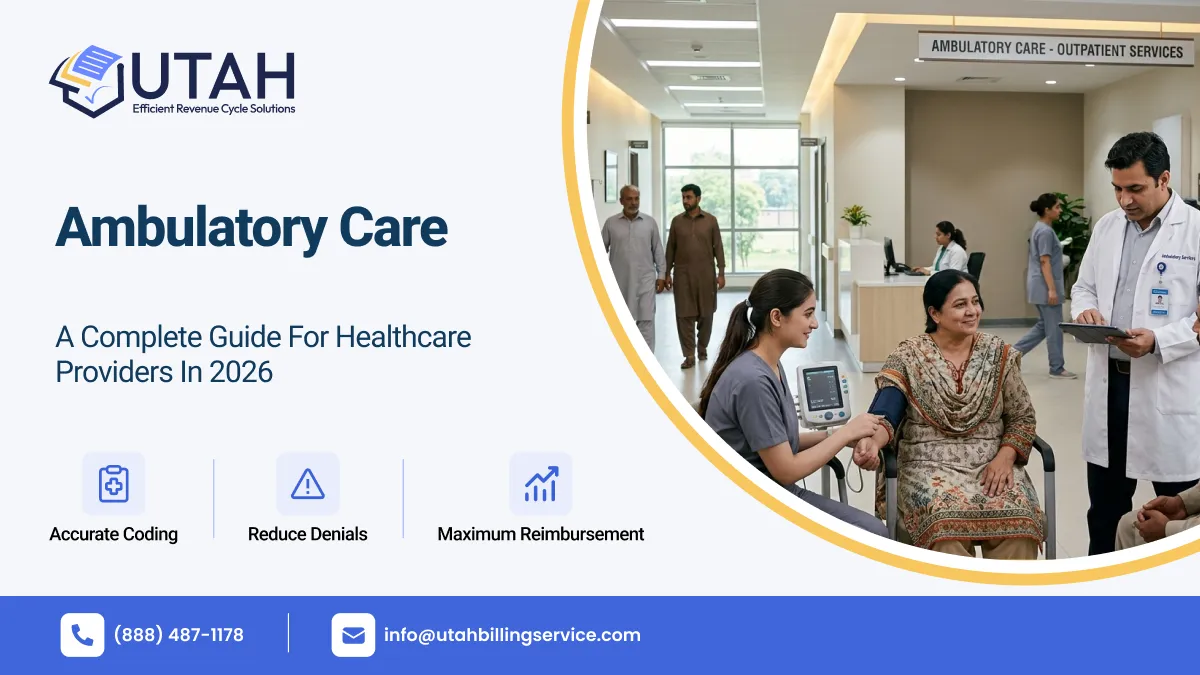
Long hospital stays and complex inpatient treatments are a thing of the past in health care. Today, many patients choose to get quality medical care that suits their schedules, returning home the same day. The increased need for accessible and efficient healthcare has made ambulatory care one of the fastest expanding sectors in the U.S. healthcare system.
So what does ambulatory mean in medical terms? In simple terms, ambulatory care is the care offered to patients that do not require an overnight stay in a hospital. Instead, they go to a healthcare centre, get the needed treatment or consultation, and go home. Such services might range from basic doctor’s visits and diagnostic testing to seeing specialists, having minor procedures or outpatient surgery and many more health care services on the same day.
For healthcare providers, ambulatory care is more than the place where a patient receives care. It’s a vital part of daily operations, from proper documentation and medical coding to claims submission and reimbursement. Even a minor error in coding or invoicing can cause unnecessary delays, denials and financial problems for healthcare organizations.
As a result of increased availability of outpatient services by health facilities such as hospitals, clinics and doctor’s offices, there is an increased need for a clear understanding of ambulatory care. There should be knowledge on what it is all about, its difference with inpatient care and some techniques for improving billing efficiency.
In this guide, we’ll break down ambulatory care from a healthcare provider and medical billing perspective, covering its meaning, common settings, billing and coding considerations, operational challenges, and best practices to help organizations deliver better care while maintaining financial efficiency.
Ambulatory care refers to healthcare services delivered on an outpatient basis where patients receive treatment without being admitted to a hospital or healthcare facility overnight.
A patient receiving care in an ambulatory setting typically arrives for an appointment, procedure, consultation, or treatment and returns home the same day.
Examples of ambulatory care include:
Unlike inpatient care, which involves hospital admission and continuous monitoring, ambulatory care focuses on short-duration healthcare services.
According to healthcare payment research, ambulatory care is provided across multiple locations, including physician offices, hospital outpatient departments, dialysis centers, and ambulatory surgical centers.
The word ambulatory comes from the concept of walking or mobility. In medicine, the term can have two related meanings:
For example:
Understanding this distinction is important because the term is commonly used in both clinical documentation and healthcare operations.
Although both involve medical treatment, ambulatory and inpatient care operate differently.
| Feature | Ambulatory Care | Inpatient Care |
|---|---|---|
| Patient stay | Same-day visit | Overnight hospital admission |
| Location | Office, clinic, ASC, outpatient department | Hospital unit |
| Treatment type | Routine visits, procedures, diagnostics | Complex medical conditions |
| Billing approach | Outpatient coding and reimbursement rules | Inpatient coding methodologies |
| Documentation focus | Visit complexity, medical necessity, services performed | Admission details, hospital course, discharge information |
For providers, selecting the correct care setting is important because it influences coding, claim processing, and reimbursement.
Ambulatory care is delivered in many different healthcare environments.
Physician practices are among the most common ambulatory care settings. They provide:
Examples include:
Ambulatory surgical centers allow patients to receive surgical procedures without hospital admission.
Common ASC procedures include:
These facilities require accurate documentation and coding because reimbursement depends heavily on procedure details, payer policies, and medical necessity.
Many hospitals operate outpatient departments where patients receive services without being admitted.
Examples include:
These services may involve both professional and facility billing components depending on the organization and payer requirements.
The growth of ambulatory care has changed how healthcare organizations manage operations.
Providers benefit from ambulatory models because they can:
However, increased outpatient volume also creates challenges for billing teams.
More encounters mean:
Effective revenue cycle management becomes essential for maintaining financial stability.
Ambulatory care billing requires accurate coordination between clinical documentation, coding, claims submission, and payer processing.
The typical ambulatory billing workflow includes:
Before providing services, billing teams verify:
Incorrect eligibility information can result in avoidable claim denials.
Medical documentation supports:
Incomplete documentation can create compliance risks and reimbursement delays.
Medical coders review documentation and assign appropriate:
Code selection depends on the services performed, provider documentation, payer guidelines, and applicable coding rules.
The American Medical Association provides guidance and resources focused on improving outpatient documentation and coding accuracy for physician practices.
After coding, claims are submitted to insurance companies.
Billing teams monitor:
A strong claims management process helps reduce revenue leakage.
Even efficient ambulatory practices can face reimbursement problems.
Incomplete documentation may lead to:
Providers should ensure documentation accurately reflects the services delivered.
Coding mistakes can happen when:
Accurate coding requires ongoing education because payer rules and guidelines change frequently.
Many outpatient services require payer approval before treatment.
Missing or incorrect authorization can result in:
Common ambulatory claim denials include:
A proactive denial management strategy helps providers identify root causes instead of only correcting individual claims.
Coding accuracy is one of the most important parts of ambulatory billing.
Healthcare organizations should focus on:
Office-based E/M coding requires documentation supporting the appropriate service level.
Factors may include:
ICD-10-CM codes should accurately describe the patient’s condition, symptoms, or reason for the encounter.
Diagnosis coding should support medical necessity but should never be selected only to increase reimbursement.
The place of service reported on claims helps identify where healthcare services occurred.
Incorrect reporting may create reimbursement problems or payer scrutiny.
Healthcare organizations can improve performance by following several strategies.
Providers should:
Successful ambulatory practices require collaboration between:
Regular education helps reduce avoidable errors.
Important metrics include:
Tracking these indicators helps identify operational weaknesses.
Modern ambulatory practices increasingly rely on:
Technology can improve efficiency, but it must be combined with accurate processes and trained staff.
Managing ambulatory billing internally can become challenging as patient volume increases.
A professional medical billing partner can help healthcare organizations with:
The goal is not simply submitting more claims but creating a compliant, accurate, and efficient billing workflow.
Outpatient treatment has become a feature of modern health care delivery in the United States. As more and more patients are being treated outside of the traditional hospital environment, healthcare providers need to focus on effective operations and proper documentation and compliance invoicing procedure.
Successful ambulatory care practices must blend quality patient care with effective revenue cycle management. Improving coding accuracy, reducing claim errors and maintaining clear documentation can assist healthcare institutions develop a more efficient and financially viable outpatient model.
If your clinic is looking to streamline claim administration, reduce billing headaches or improve revenue cycle operations, working with an experienced medical billing staff can help lighten the load of complicated administrative processes.
What is Ambulatory Care Meaning?
Ambulatory care is medical care given to patients who are not admitted to a hospital for overnight care. Ambulatory care is sometimes termed outpatient care. That includes visits to doctors, tests, outpatient treatment, and care from experts.
Ambulatory denotes that a person is able to get up and walk or move around, and not be in bed.
Ambulatory in medical terms can mean a patient who is able to walk, or a health care treatment given to an outpatient.
Is Ambulatory Care Equivalent to Outpatient Care?
Yes, ambulatory care and outpatient care are very similar. Both are services provided to a patient when the patient is not admitted to a hospital for inpatient care.
Ambulatory care centres include:
These include physician offices, ambulatory surgical centres, hospital outpatient departments, diagnostic centres, and specialised clinics.
What is the Impact of Ambulatory Care on Medical Billing?
Ambulatory care impacts outpatient coding standards, documentation guidelines, claim filing procedures, payer constraints, and methods of reimbursement.
For what reasons are ambulatory care claims denied?
Common causes are improper coding, lack of authorization, inadequate paperwork, eligibility issues and payer specific billing issues.